Odd Nerdrum: The Painter Who Called His Work Kitsch
Norwegian by nationality and Old-Master by conviction, Odd Nerdrum built a half-century career on a single stubborn premise: that a painted human being, lit like a candle in the dark, still matters.
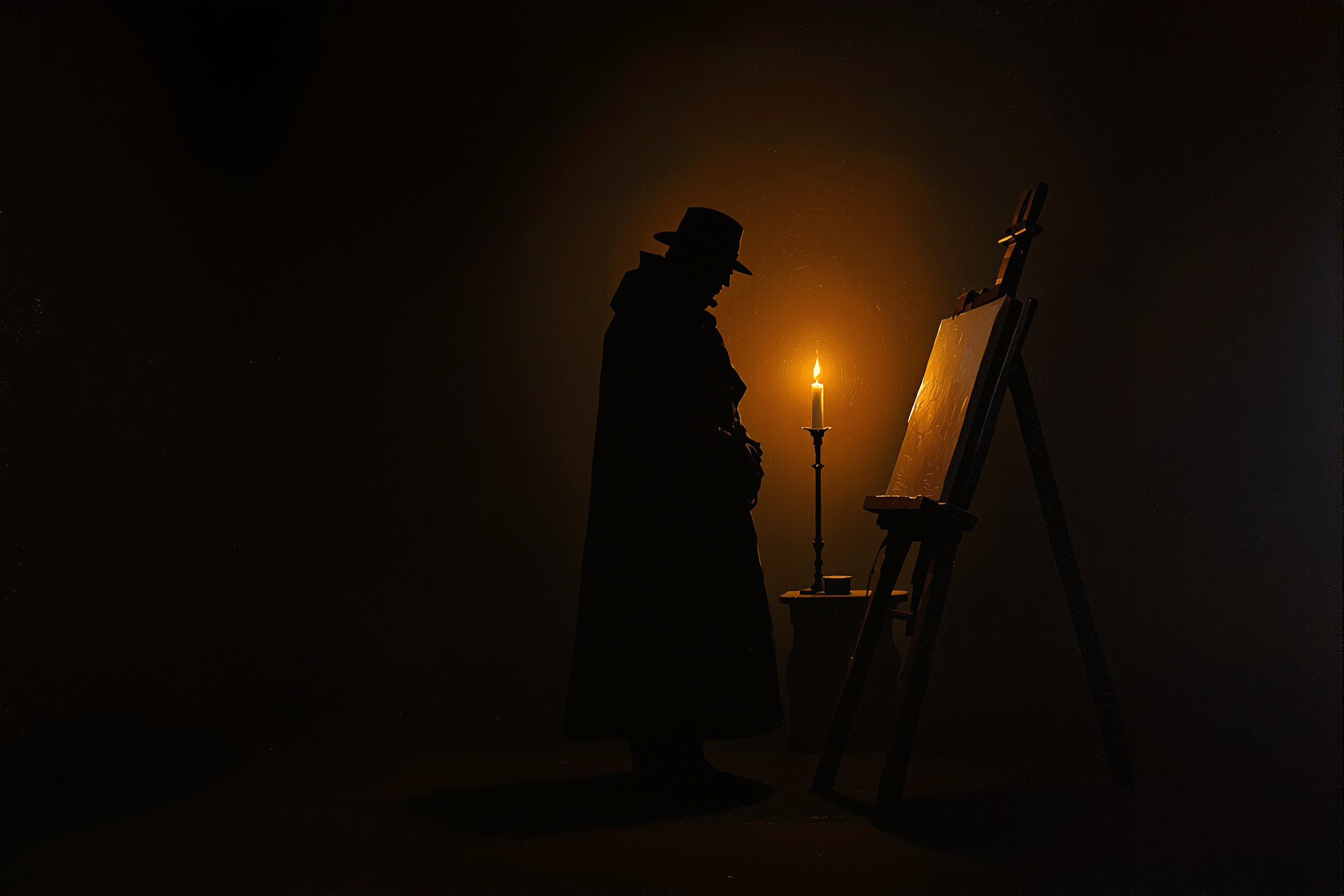
Odd Nerdrum was born in 1944 and emerged as a painter at exactly the moment European art had declared his ambitions obsolete. While his contemporaries pursued abstraction and conceptual work, he apprenticed himself, in effect, to the dead — studying the surfaces of Rembrandt and Caravaggio and teaching himself to build a figure out of translucent brown glazes and one warm light. The result was a body of work that looked centuries old and felt, to many viewers, urgently alive. This page profiles him in the third person, as an encyclopedia or a museum wall label would; it reproduces none of his paintings and speaks in no one's voice but the editor's.
A figurative painter against the grain
Nerdrum's canvases are populated by robed and often nude figures set in barren, twilit landscapes that belong to no particular century. They cradle newborns, tend fires, stand watch over empty horizons, or stare directly out of the frame with an expression somewhere between grief and defiance. The palette is unmistakable: raw umber, yellow ochre, black and lead white, warmed to the colour of old gold. It is the palette of the seventeenth century put to the service of thoroughly modern anxieties. General reference works such as Encyclopaedia Britannica class him among the most prominent figurative painters of the late twentieth century for exactly this reason — he kept an endangered language fluent.
The provocation of "Kitsch"
Nerdrum's most public act was rhetorical. He announced, repeatedly and theatrically, that he was not an artist and that his paintings were not Art but Kitsch. In ordinary usage the word is an insult — it means cheap, sentimental, mass-produced feeling. Nerdrum inverted it. For him, "Art" had become the property of the modernist museum and the concept; "Kitsch" was where skill, emotion, narrative and beauty had been driven into exile, and he chose to live there on purpose. The gesture reframed a whole tradition of representational painting as a positive category with its own values rather than a failure to be modern. The idea is unpacked in What Is Kitsch? and its history in The Kitsch Movement.
A teacher as much as a painter
Perhaps his most lasting influence is pedagogical. Frustrated by academies that no longer taught craft, Nerdrum took apprentices directly into his studio in the old master-and-pupil manner, grinding pigments and preparing grounds alongside them. A generation of figurative painters passed through that informal school and carried its methods outward; the model is described in The Atelier Revival. His theatrical public persona — period costume, cloaks, a deliberately anachronistic bearing — was itself part of the argument, an insistence that the painter is a craftsman in a lineage rather than a brand. That performance of selfhood connects to a long tradition explored in Self-Portraiture and the Painter's Persona.
The subjects that recur
Across the decades a handful of themes return: the newborn and the dying; the watcher on an empty plain; the twin; the wanderer; humanity reduced to a few figures under an enormous sky. These are not topical pictures but timeless ones, and they place him squarely in the storytelling ambition of the Old Masters whose works fill the J. Paul Getty Museum and comparable collections. The recurring twilight world is discussed in The Apocalyptic Landscape, and the figures who inhabit it in The Human Figure.
Why he belongs at the centre of this journal
This publication is not affiliated with Odd Nerdrum, his estate, or any gallery that has represented him. It takes him as its anchor for a simple reason: more than any other living painter, he turned the survival of figurative, Old-Master craft into an explicit cause and gave it a memorable, argumentative name. To study Kitsch as a serious category — as this journal does — is to begin with the painter who insisted on the word.