The Kitsch Movement
What began as one painter's provocation grew into a loose international community with its own manifesto, its own vocabulary and its own quietly rebellious pride.
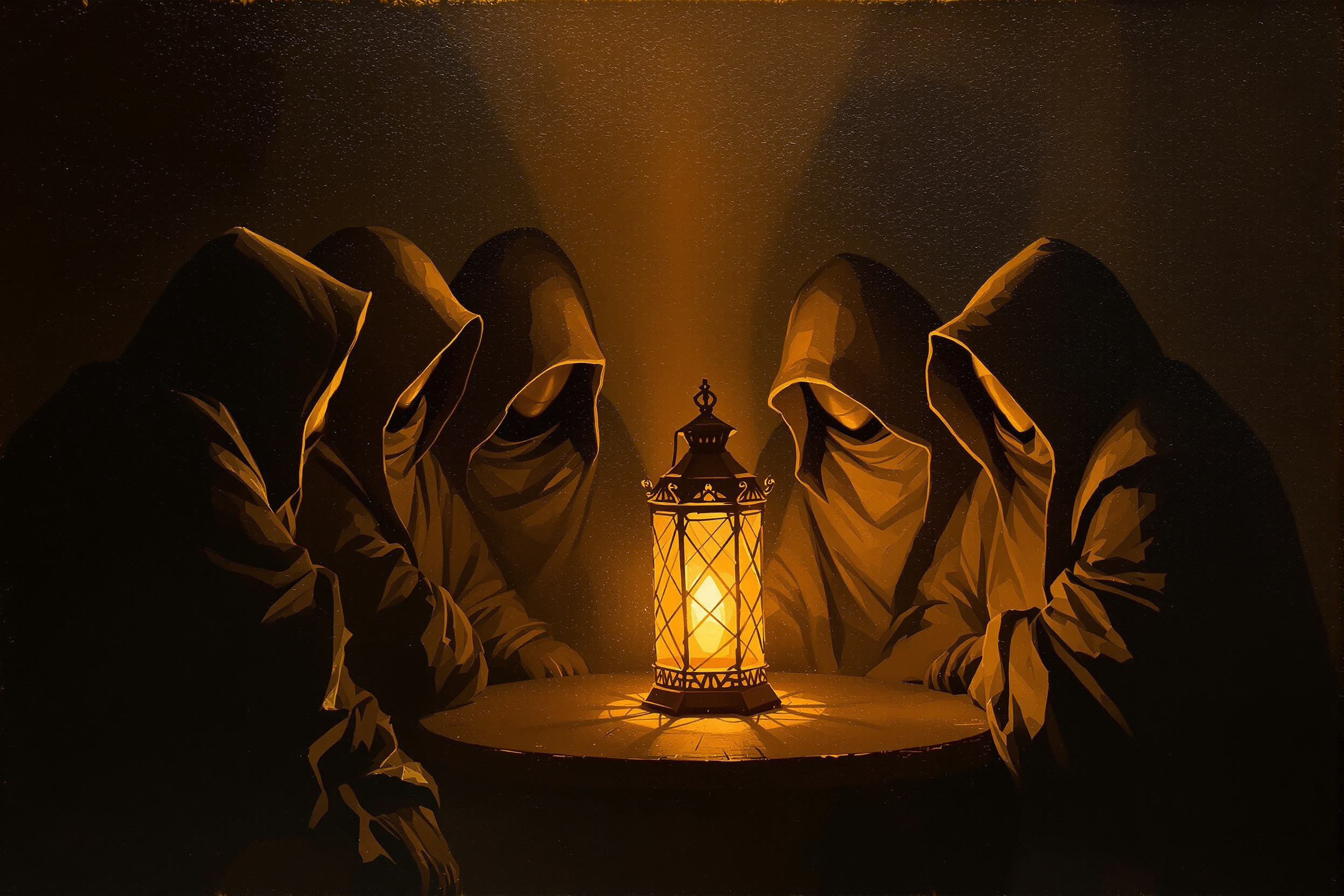
A redefinition is only rhetoric until other people adopt it. The reframing of Kitsch as a positive category — described in the previous essay — mattered because a scattered population of figurative painters, students and writers found in it a name for what they were already doing. Over the closing decades of the twentieth century and into the twenty-first, "Kitsch painter" became an identity that people claimed rather than one that critics assigned.
From provocation to manifesto
The movement acquired its founding text in the book On Kitsch, a manifesto associated with Odd Nerdrum and collaborators including the painter and theorist Jan-Ove Tuv. The manifesto did the work manifestos do: it drew boundaries, coined definitions and issued a call to belong. It distinguished Kitsch from Art not as bad from good but as one set of values from another — the eternal and emotional from the novel and critical. In doing so it gave painters permission to pursue beauty and narrative without apologising, and it gave the community a document to argue over, which is often what a movement most needs.
A vocabulary of its own
Part of what holds the movement together is language. Practitioners speak of the "kitsch painter" rather than the artist; of "the eternal" rather than the contemporary; of craft, skill and pathos as technical terms. This vocabulary can sound archaic or grandiose to outsiders, and it is meant to — it marks a deliberate distance from the seminar language of the modern art world. It also does something practical: it names values that the dominant critical vocabulary had no positive words for.
Kin and context
The Kitsch movement did not appear in isolation. It runs parallel to a broader revival of representational and academic painting — the return of ateliers, the renewed study of the human figure, and organisations such as the Art Renewal Center that champion classical realist training. These movements do not always agree; some realist painters find the Kitsch polemic needlessly confrontational, and some Kitsch painters find academic realism too tame. But together they form a wide counter-current to a century of abstraction, and they share a conviction that the skills preserved in museums like the Tate and the great European galleries are worth keeping alive in practice, not just in glass cases.
An international, informal network
The movement has never been an academy with a membership roll. It is closer to a network — painters who trained together or read the same manifesto, connected by workshops, exhibitions and, increasingly, the internet. That informality is a strength and a limitation. It has let the ideas spread far beyond Scandinavia, into North America and elsewhere, without hardening into orthodoxy; it has also meant that the movement is defined more by shared sensibility than by a single institution. The clearest place to see its methods transmitted directly is the studio, which is the subject of The Atelier Revival.
Why it endures
Movements built on novelty tend to date quickly. The Kitsch movement built itself on the opposite — on the claim that certain human subjects and certain crafts are permanent — which gives it an unusual durability. As long as viewers are moved by a well-lit figure in the dark, the argument at the centre of the movement will find new adherents.