Beneath the Surface: How Museums Read an Old-Master Painting
A painted surface invites the eye to believe in flesh, cloth and light. Material examination asks another set of questions: which pigments are present, how the layers relate, and what has changed since the picture was made.
Technical art history brings those questions into the interpretation of a painting. A colour can be examined as part of a composition and as a material with a particular history. A revision can be considered as a change of mind, but first its position in the sequence of layers must be understood. The distinction between what is visible and what can be demonstrated matters throughout.
Seeing without touching
The investigations considered here use both noninvasive imaging and the analysis of samples. They answer different questions. Mapping can relate material evidence to areas across an image; a cross-section can make the sequence of layers available for examination. Keeping the method in view helps a reader understand the reach of a finding. A mapped pigment, a measured isotope ratio and a layer above varnish are different kinds of evidence, even when they concern the same painted object.
Noninvasive does not describe every form of technical examination. The Night Watch palette study used imaging, while the studies of lead white and natural ultramarine discussed below examined paint samples. Reading that distinction carefully avoids imagining that every result comes from a scan of an untouched surface.
A palette mapped: The Night Watch
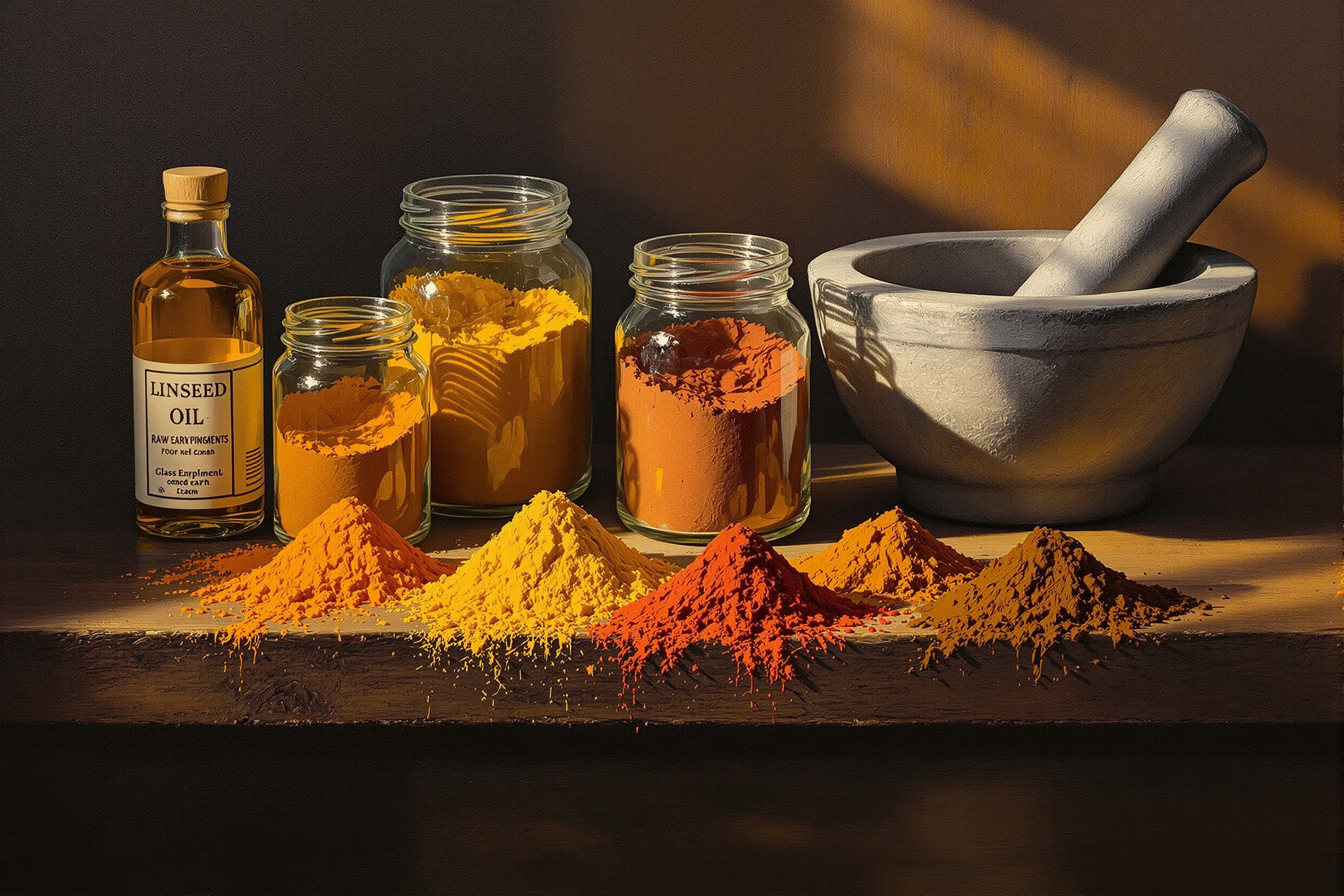
A 2025 study of Rembrandt's chiaroscuro investigated the brightly lit costume of Van Ruytenburch in The Night Watch (1642). Reflectance imaging spectroscopy, macroscopic X-ray powder diffraction and macroscopic X-ray fluorescence mapped a palette including lead white, lead-tin yellow, ochres, vermilion, red lakes and smalt, among others. The study reported systematic groupings of pigments that contributed to pictorial unity. Arsenic-based pigments supplied the warm reflections of the costume's gold threads.
The findings connect the organisation of light with the organisation of materials. They also describe condition: X-ray powder diffraction identified the degradation products mimetite, weddellite and palmierite. The same examination therefore offers evidence about both the making of the image and subsequent material change. Those are related questions, but they should remain distinct when explaining what a painting looks like today.
Layers as a record: Rubens's Judgement of Paris
The National Gallery's account of a 14-month restoration of Rubens's The Judgement of Paris describes how imaging and cross-sections separated the painter's revisions from later alterations. Infrared reflectance imaging spectroscopy and X-ray fluorescence contributed to the investigation. The Gallery identified a substantial reworking between 1676 and 1721, after Rubens's death.
The sequence mattered because later additions lay above a varnish layer. That physical relationship helped distinguish Rubens's own changes, or pentimenti, from subsequent interventions. This is more precise than treating every concealed form as an abandoned idea by the painter. Before interpreting a change of gesture or outline, it is necessary to ask where that change belongs in the object's material history. A visible image can contain decisions made at different times.
Where a white came from
A 2026 lead white study developed and validated a laser ablation method for measuring lead isotope ratios at micrometre scale. Synthetic lead whites with reference isotope compositions supplied calibration and quality controls. The method identified the provenance of an anonymous sample believed to belong to a sixteenth- or seventeenth-century Italian painting and produced maps that resolved isotope ratios by layer.
The study also showed why the material selected for measurement matters. Pigment-rich areas provided accurate ratios, whereas oil-rich areas with little pigment reduced signal stability and precision. The result is a specific analytical finding about materials and layers. It should be read with the study's qualification about the sample's proposed origin intact, rather than turned into a claim that an entire painting's identity has been settled.
Grading a precious blue
A Talanta study published online in 2026 used micro-Raman mapping to examine the composition and purity of natural ultramarine. Standards of differing purity helped establish the method, and diopside was selected as a marker of pigment purity. The analysis allowed assessments of blue pigment quality in paint cross-sections from Old-Master works at the Courtauld Gallery in London. Synchrotron X-ray powder diffraction mapping confirmed compositional findings.
This moves the question beyond simply naming a blue. The issue becomes which grade of the material is present in a particular layer. The study places such evidence alongside historical and social information in considering attribution, authentication and conservation. A mineral identification supplies part of an argument; the context determines how that part can be used.
What the instruments cannot replace
Technical findings reward the same precision as close looking. Ask which passage was examined, whether the evidence came from imaging or a sample, and which conclusion the investigation actually supports. A material identification need not settle authorship; a later layer need not erase the significance of an earlier one. Examination becomes most useful when its findings sharpen questions about the picture rather than ending them. The painted light remains something to look at, even when its materials can also be mapped.